BPBX
Enterprise IP-PBX Platform · Unified Calling, Conferencing, and Broadcast Intercom
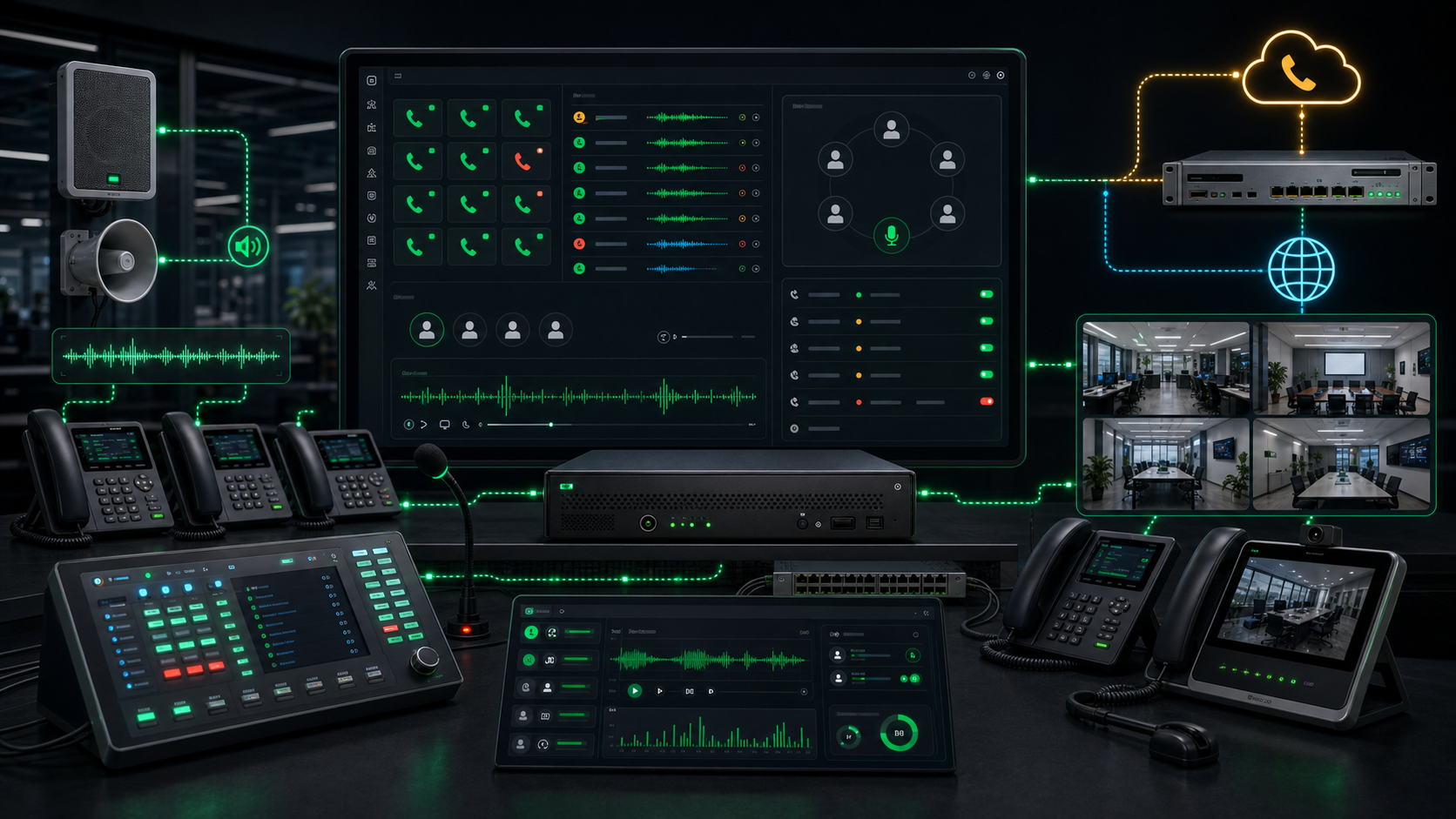
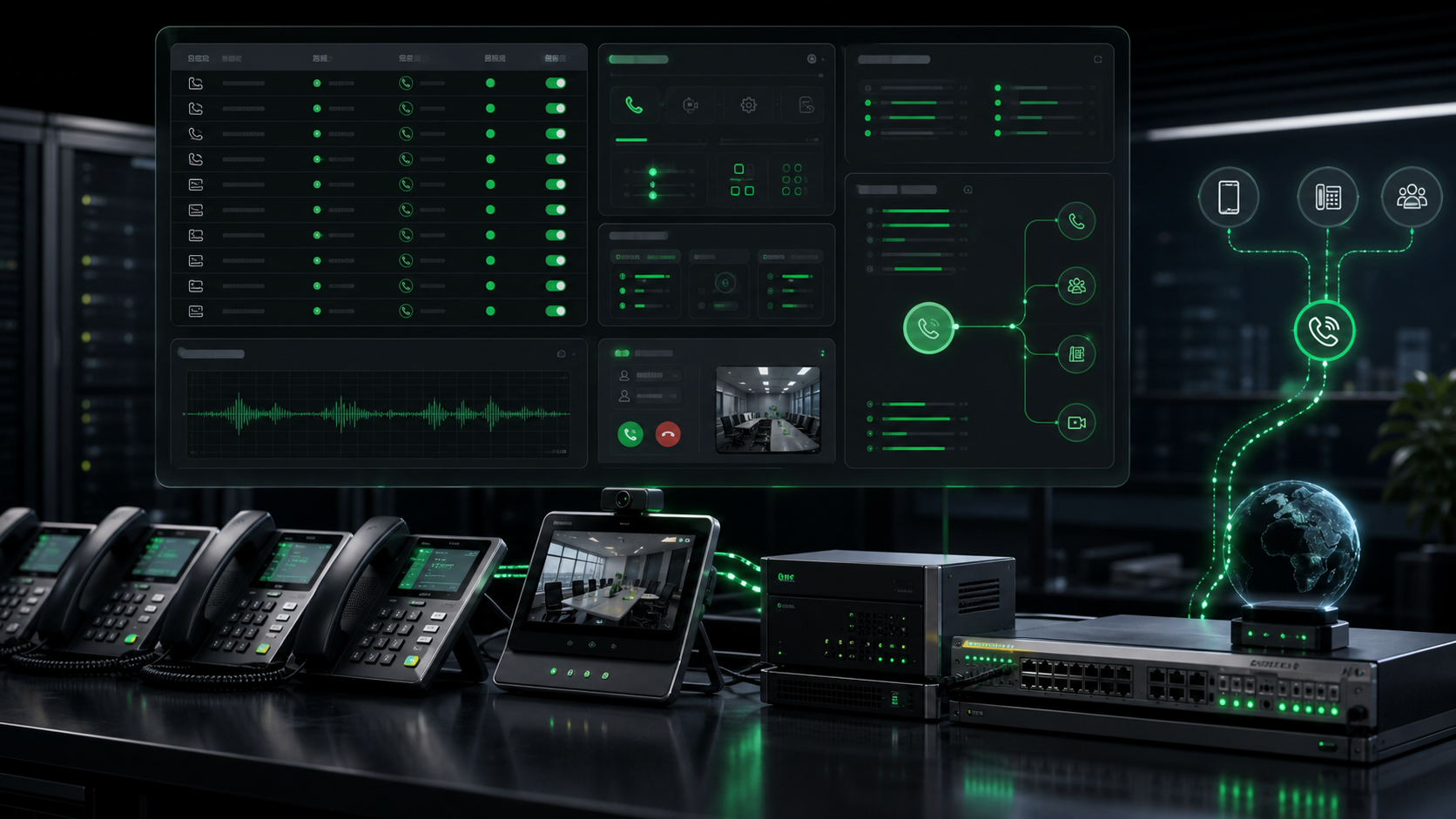
A lightweight enterprise IP-PBX communications platform built around standard SIP. BPBX unifies extensions, trunks, inbound routing, conferencing, broadcast, paging/intercom, call recording, and real-time monitoring — with a visual web console, high-availability failover, audit logging, and license management. It serves as the server-side backbone for IP300 dispatch consoles and any SIP terminal, powering call centers, broadcast dispatch, and conferencing with an efficient, stable, and flexible foundation.
Why It Matters
Standards-based Enterprise IP-PBX
Full SIP 2.0 compliance (plus IAX2 / H.323) drops into existing VoIP networks, SIP phones, and third-party platforms. Delivered as software and scaled on demand — from daily calls to large-scale dispatch.
All-in-One Communications
One-to-one and group calls, multi-party conferencing, broadcast tasks, paging/intercom, call recording, IVR, and inbound routing — one platform covering everything from daily calls to emergency dispatch.
Visual Web Management · Real-time Monitoring
A visual web console with a live dashboard for online extensions, concurrent calls, and conferences; real-time view and hang-up of active channels and bridges; and a 24-hour call-volume chart at a glance.
High Availability · Secure & Controlled
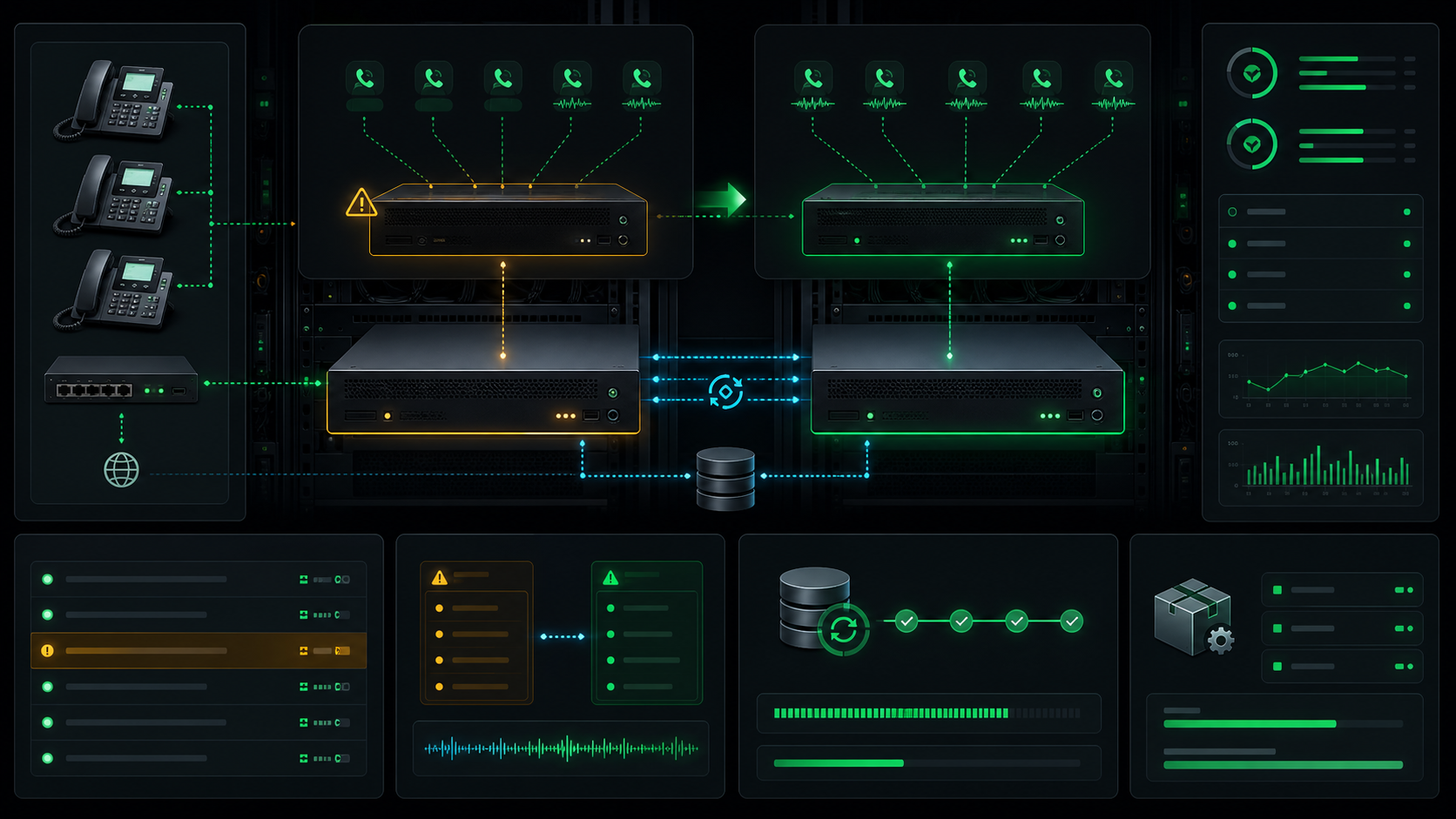
Dual-node hot-standby failover with sub-second switchover; built-in login logs, audit trails, app authorization, and token-based auth — plus backup and one-click upgrade — for business continuity and data security.
Capabilities
Extension & Trunk Management
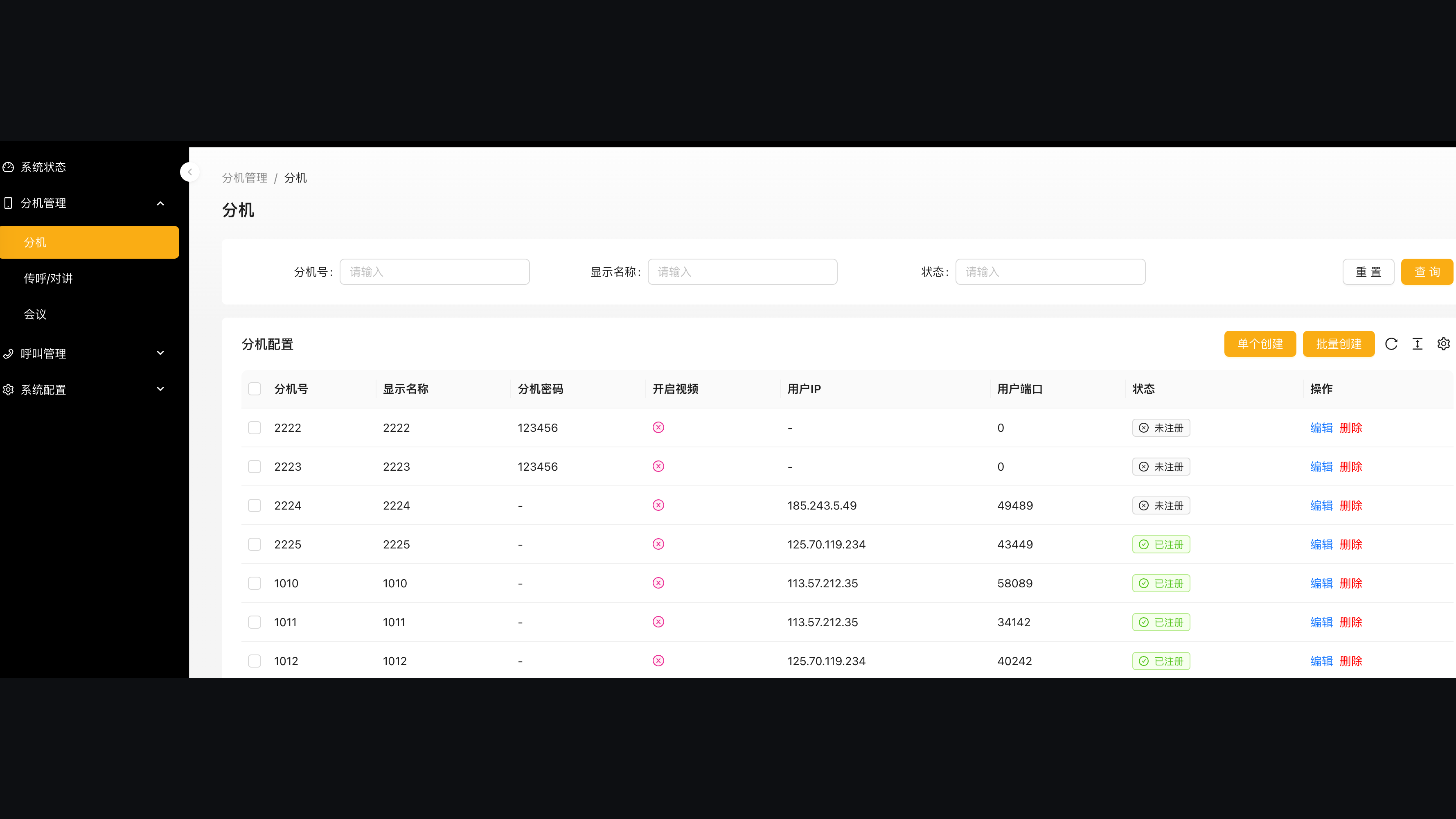
Create and manage SIP extensions visually — single or batch provisioning, password and codec settings, video enablement, and live registration status. Trunk management connects carrier gateways and third-party platforms, while inbound routes flexibly direct incoming calls.
Intercom · Broadcast · Paging
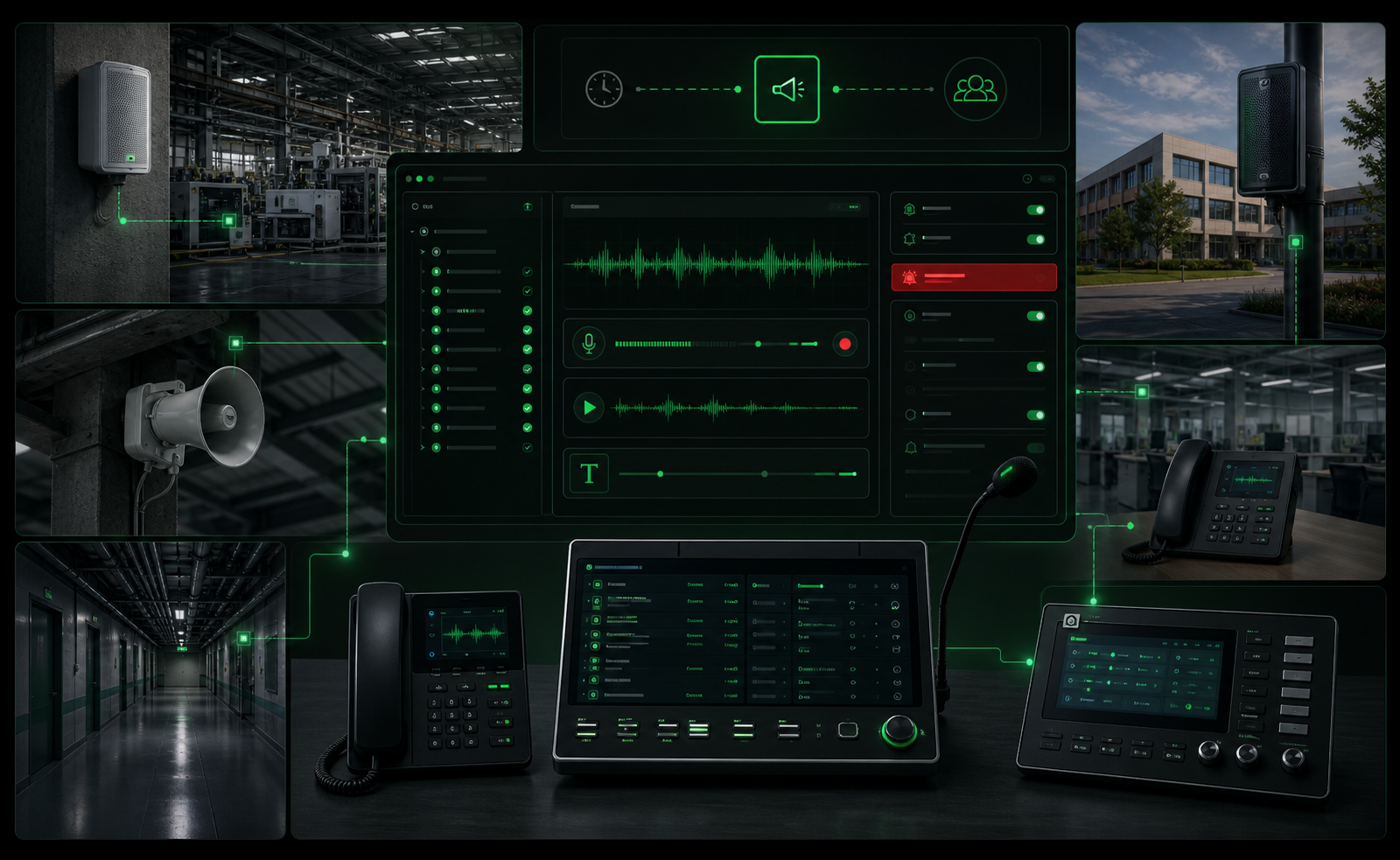
Build paging and broadcast groups in one click with emergency override, secondary join, and call delay. Broadcast tasks schedule bulk outbound calls playing pre-recorded audio or TTS — built for announcements and emergency paging.
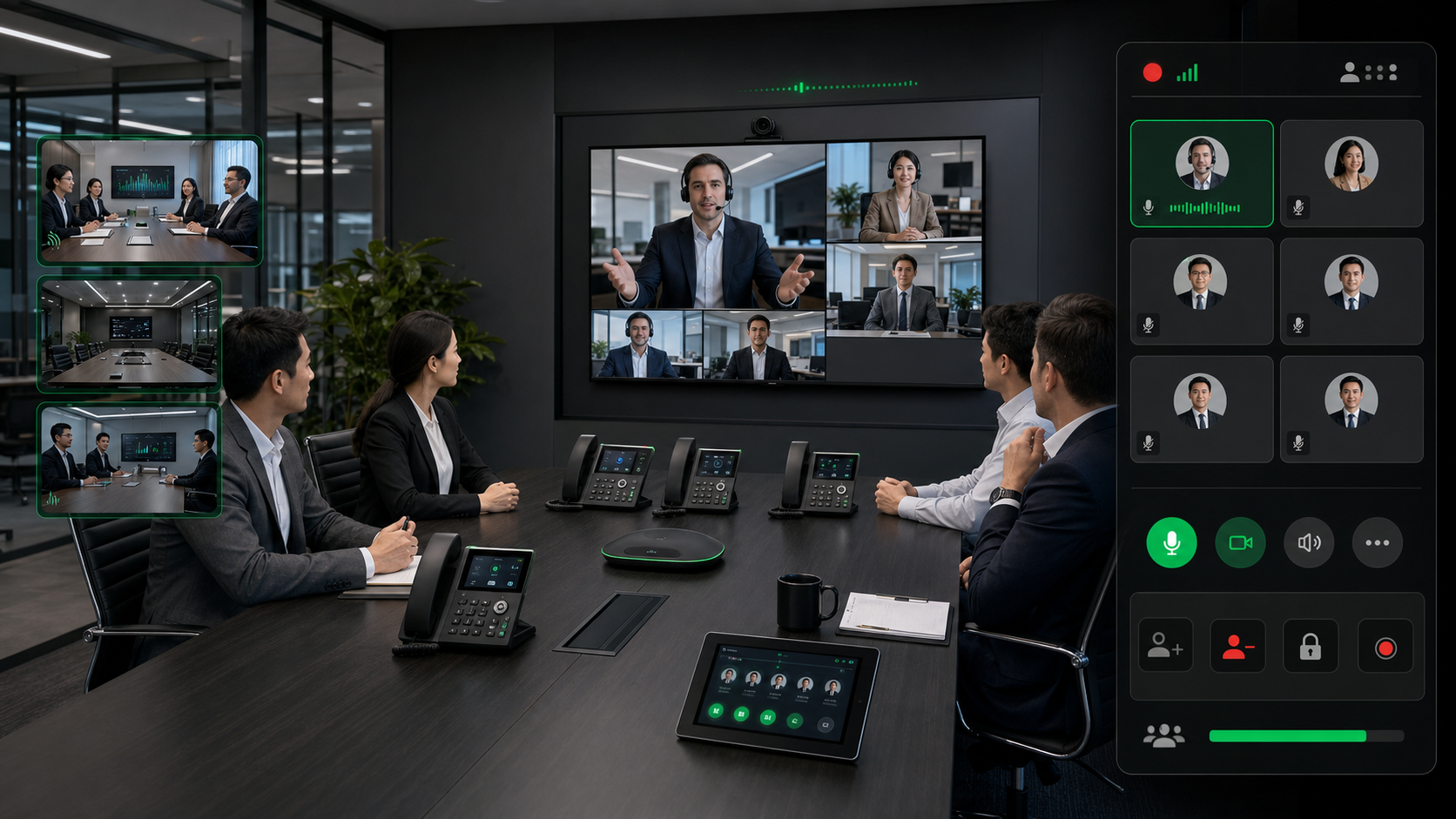
Multi-party Conferencing
Spin up conference rooms with member caps, PIN codes, recording, and locking. During a meeting, invite or kick participants, mute/unmute, and manage members — for real-time cross-department, cross-site collaboration.
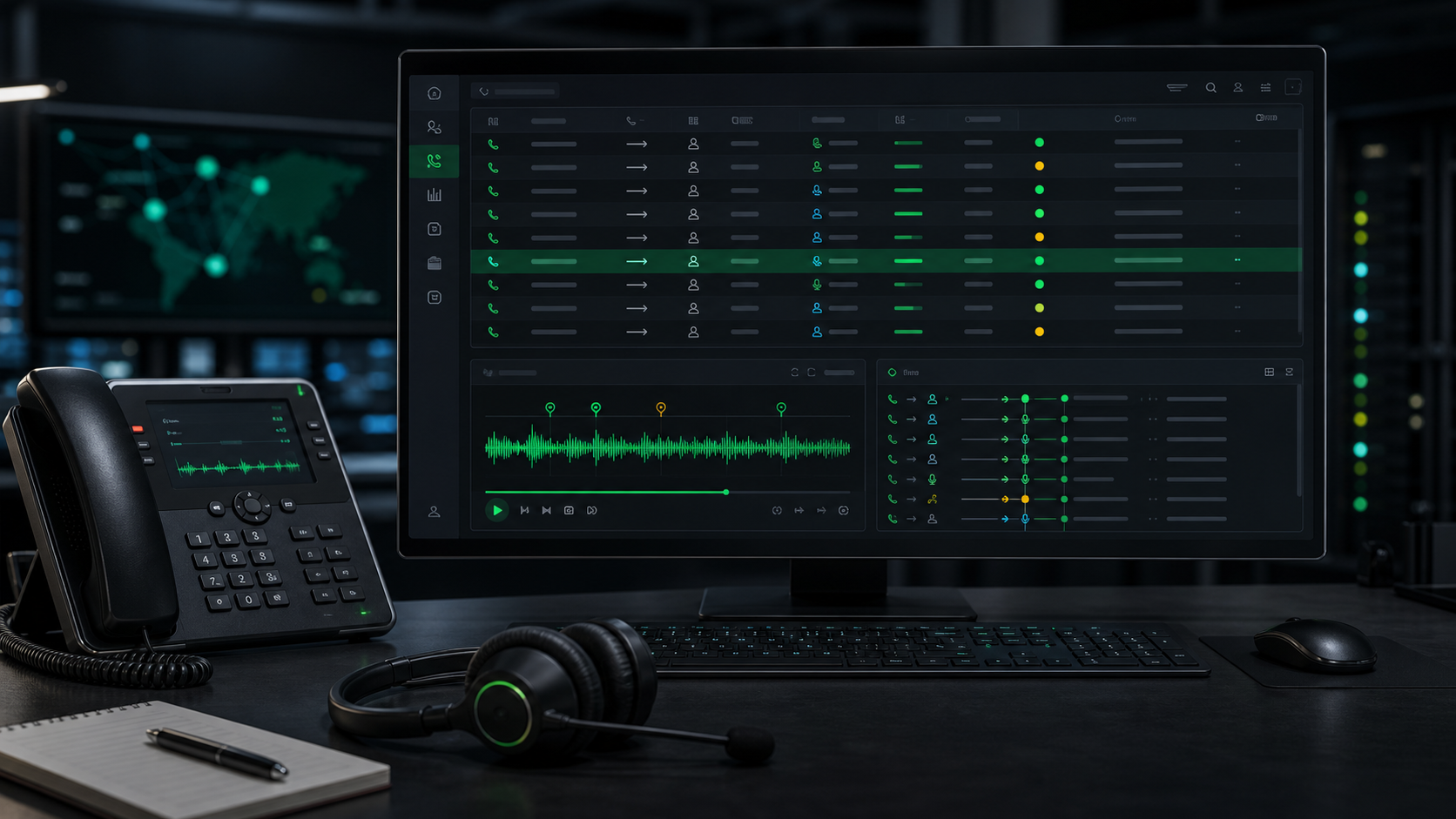
Call Records & Recording
Complete CDR logs capture caller/callee, duration, status, application type, and time, with recording downloads. Paired with per-call event logs (CEL), they support troubleshooting, auditing, and quality review.
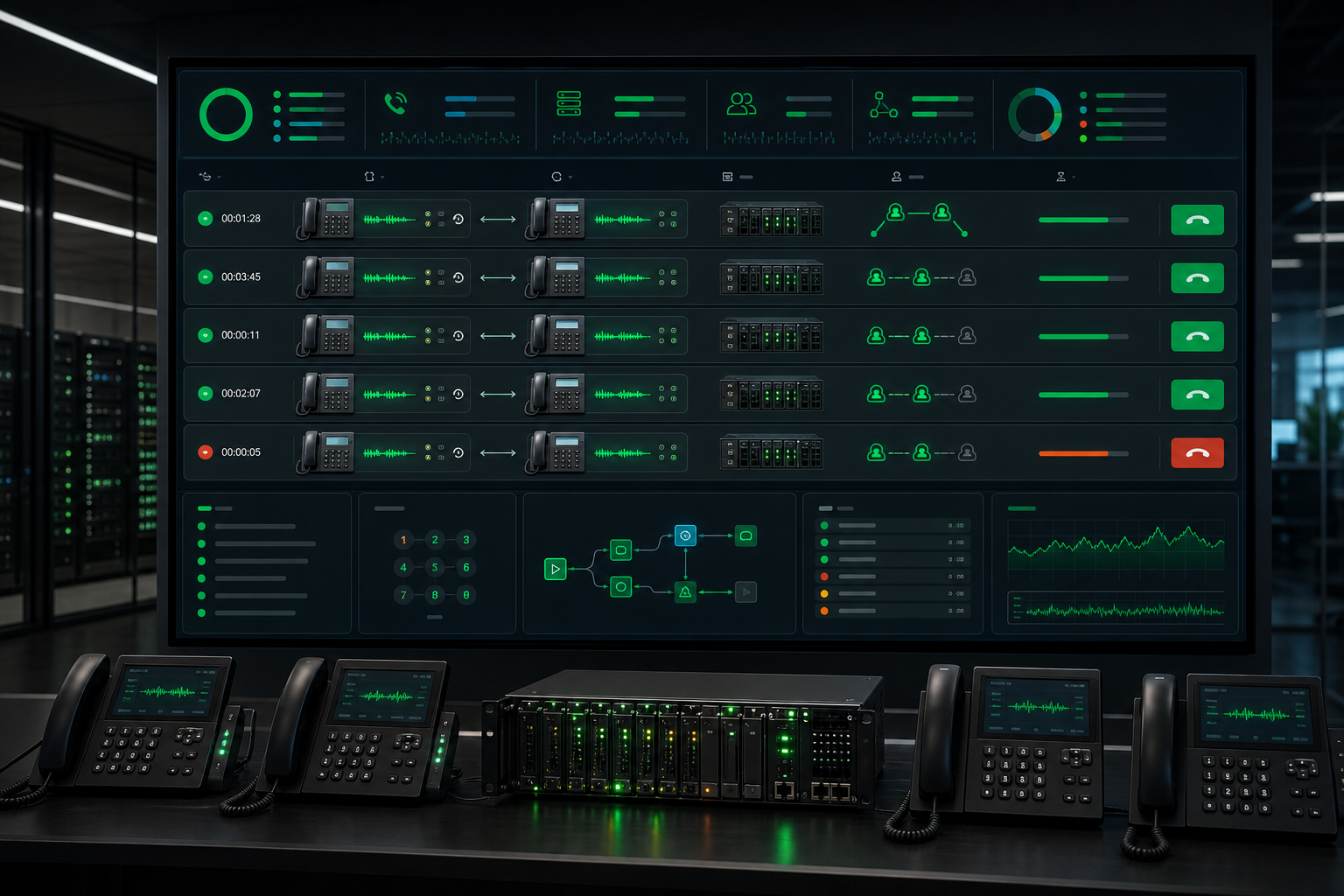
Real-time Call Monitoring
Current channels and bridges show live calls, dialplans, and channel states, with one-click hang-up for abnormal sessions. The dashboard mirrors online extensions, concurrent calls, and conferences — fully observable operations.
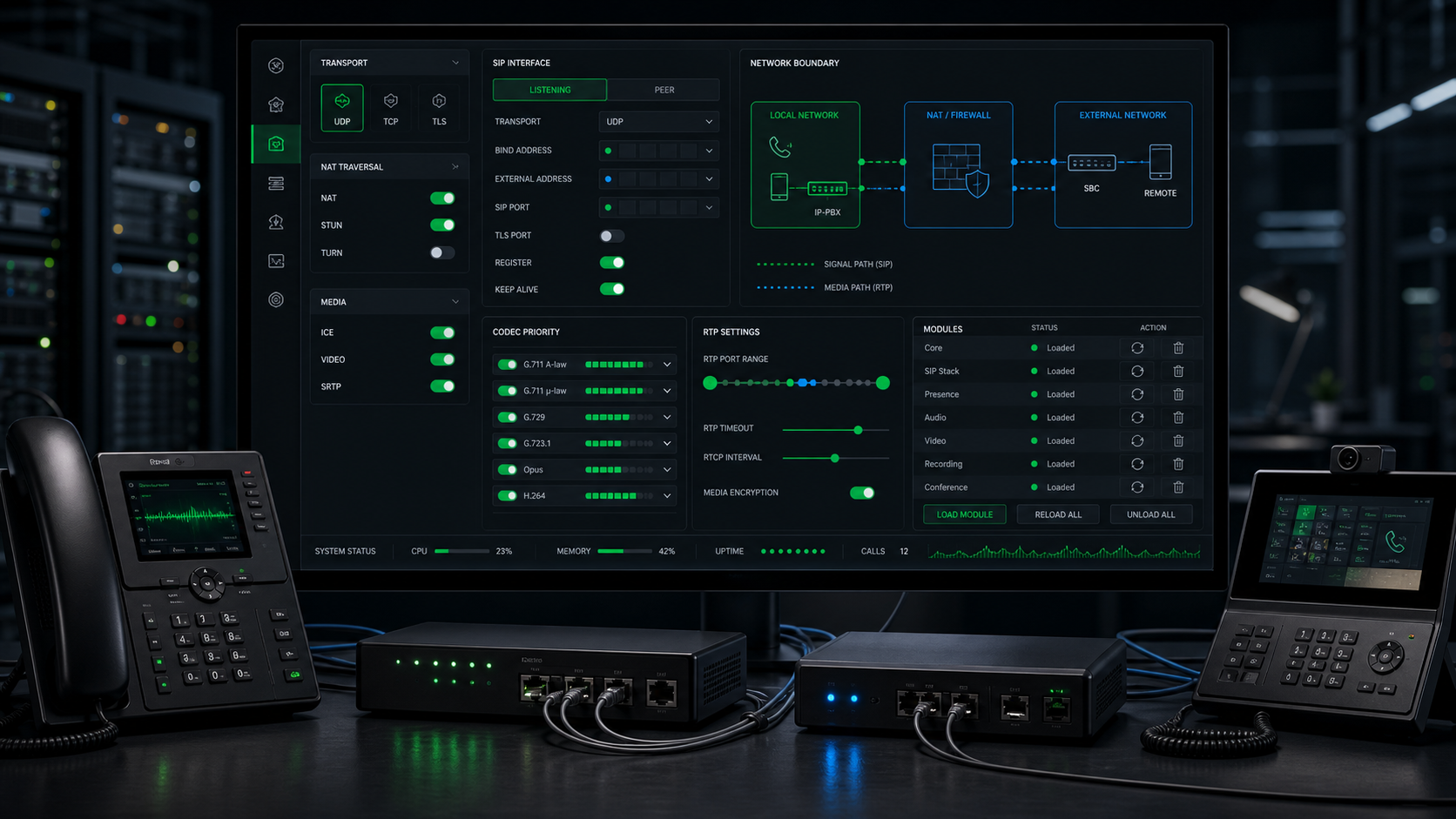
Flexible SIP Config · Modular
Adjust transport protocol, UDP address, video and ICE support, NAT, local/external networks, and enabled codecs (iLBC / G.729 / GSM / G.723 / uLaw, etc.) right from the web — with modular load/unload of functional components on demand.
HA Failover · Security & Audit
Dual-node hot-standby HA keeps the service alive with sub-second switchover; login and audit logs record every console action, app management opens third-party APIs, and licensing, upgrade, and backup are handled in one place.
Use Cases
Call Centers & Service Hotlines
High-concurrency inbound/outbound, inbound routing and distribution, call recording, and CDR analytics — a reliable telephony backbone for customer service, follow-ups, and quality control.
Broadcast & Dispatch Centers
Working with IP300 dispatch consoles for group-call mustering, zoned broadcast paging, and scheduled announcements — for large-scale dispatch in energy, transportation, and emergency scenarios.
Conferencing & Multi-site Communication
Multi-party audio conferencing with real-time member management and recording connects headquarters, branches, and field teams for cross-regional collaboration and decision-making.
Specifications
FAQ
How does BPBX relate to the IP300 dispatch console?+
IP300 is the terminal-side visual dispatch console; BPBX is the server-side IP-PBX platform. IP300 registers to BPBX as a standard SIP terminal, and BPBX handles call setup, group calls, conferencing, broadcast, and recording — together forming a complete dispatch system from console to backbone.
Can it connect to existing SIP phones and third-party platforms?+
Yes. BPBX is fully SIP 2.0 compliant and supports IAX2 / H.323, so any SIP-compliant phone, gateway, or SBC can register. Trunks and open APIs connect carrier lines and third-party business systems.
Does it support call recording and CDR queries?+
Yes. Every call produces a CDR with caller/callee, duration, status, and time; records are searchable and recordings are downloadable. CEL event logs are also available for troubleshooting and quality review.
How is high availability ensured?+
BPBX supports dual-node hot-standby deployment — sub-second failover to the standby when the primary fails — combined with backups and one-click upgrades to keep services running.
How is BPBX deployed?+
BPBX is delivered as software and runs on Docker, physical servers, or cloud hosts — starting single-node and scaling smoothly to a dual-node HA architecture as load grows. Contact the product team to scope a deployment.
Want to try it or discuss customization?
Leave a brief — a product manager replies within 24 hours
Contact Us→


Services

Cases

